
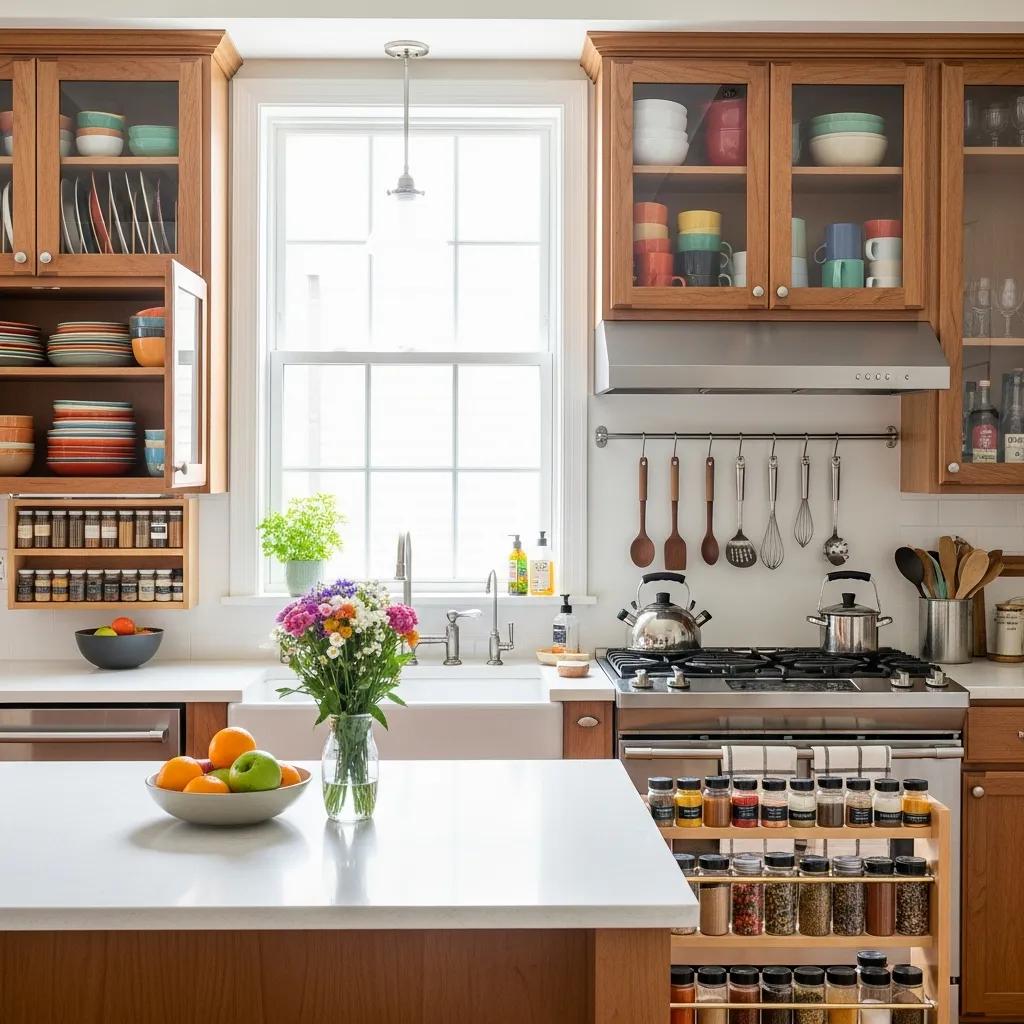
Organizing your kitchen cabinets effectively transforms cluttered, chaotic storage into a streamlined, functional space that makes meal prep and daily tasks a joy. Thoughtful organization—from grouping like items and using adjustable shelving to incorporating pull-out drawers and clear containers—maximizes every inch while reducing frustration and food waste.
This guide provides essential tips for organizing kitchen cabinets, offering practical strategies to create a system that is both beautiful and highly efficient, tailored to your cooking habits and lifestyle.
Tips for Organizing Kitchen Cabinets That You’ll Actually Use
How Do You Begin Organizing Kitchen Cabinets?? Start by Decluttering the Right Way.
If you want tips for organizing kitchen cabinets that actually stick, start with decluttering before you buy bins or rearrange shelves. Most cabinet chaos comes from keeping too much, storing items where they do not belong, or trying to fit daily-use tools around things you rarely touch. When you clear out the extras first, you can see what space you really have and how your kitchen needs to function.
Begin by emptying one cabinet at a time instead of pulling everything out at once. This keeps the process manageable and prevents the kitchen from turning into a full-day project you never finish. As you remove items, wipe down the shelves and take a quick look at what you are storing. Be honest about duplicates, “just in case” gadgets, and items that have not been used in months. The goal is not to create a minimalist kitchen. It is to make your cabinets work for your actual routine.
Decluttering also helps you avoid the most common organizing mistake: shuffling clutter into a different cabinet and calling it “organized.” When you decide what stays and what goes, the rest of the process becomes much faster because you are arranging only what you use.
What Is The Four-Box Method For Decluttering Kitchen Cabinets?
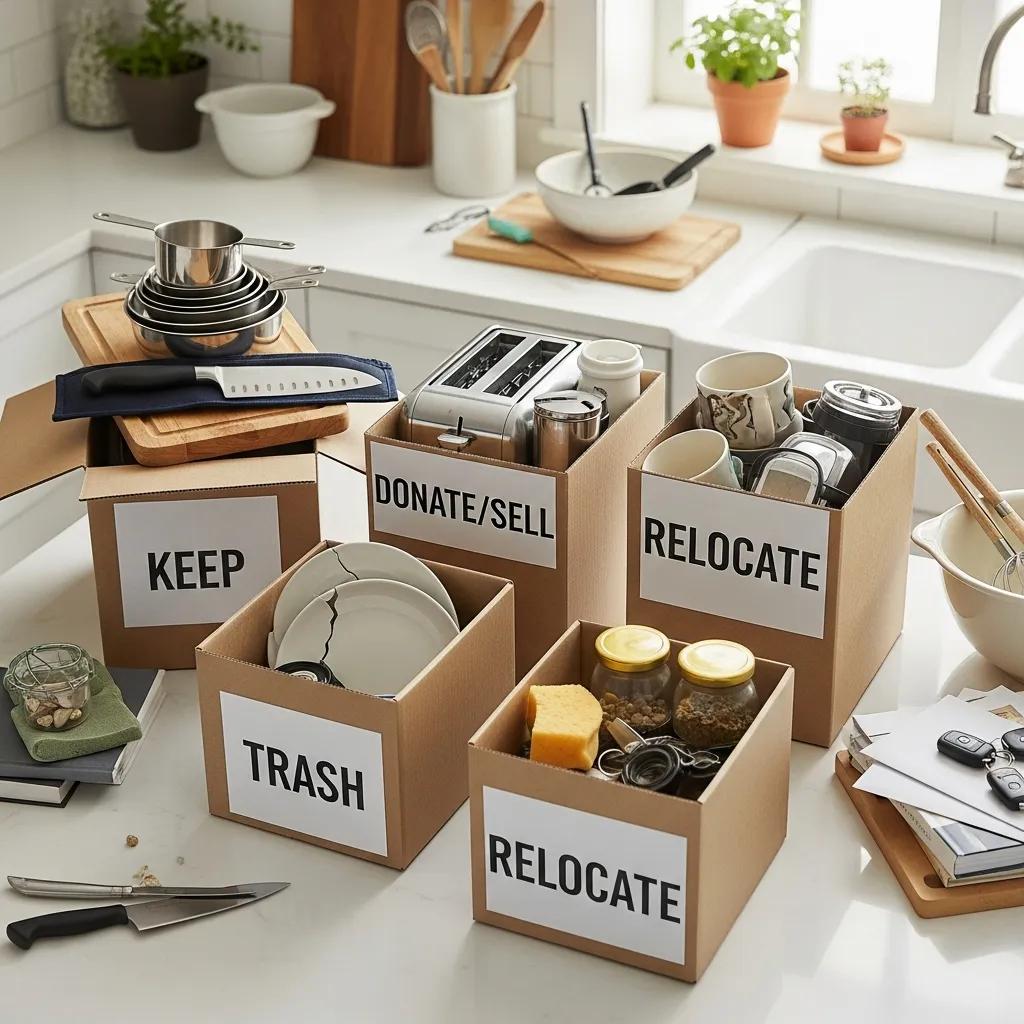
One of the easiest tips for organizing kitchen cabinets is using a sorting method that prevents second-guessing. The Four-Box Method is simple and keeps you moving. Set out four boxes or bags and label them as Keep, Donate or Sell, Trash, and Relocate. As you go through each cabinet, place every item into one of those categories.
The Keep box is for items you use regularly and want in the kitchen, including everyday dishes, cookware, and tools that fit your cooking habits. Donate or Sell is for items in good condition that you no longer need, like duplicate serving platters, unused mugs, or small appliances that take up space and never come out. Trash covers anything broken, chipped, rusted, or expired, including food items you know you will not use. Relocate is for things that ended up in the kitchen but belong somewhere else, such as office supplies, batteries, or random hardware.
This method works because it forces a decision in the moment. It also keeps you from creating “maybe” piles that sit on the counter for days. Once a cabinet is done, take the Donate or Sell box out to your car or a designated drop spot, and return Relocate items to their proper rooms. That follow-through is what makes the results last.
How Do You Assess Kitchen Zones To Make Cabinets More Efficient?
After decluttering, cabinet organization becomes a layout problem, not a storage problem. Think in terms of zones based on what you actually do in the kitchen. Most kitchens naturally have a cooking zone near the stove, a prep zone near the main counter, a baking zone if you bake often, and a storage zone for pantry items and snacks. When you group items by activity, you reduce wasted steps and keep counters clearer because you are not constantly pulling things from across the room.
Place pots, pans, and cooking utensils close to the stove so cooking feels easier and less cluttered. Prep tools like cutting boards, knives, mixing bowls, and measuring cups should live near the counter space you use most. If you bake, keep flour, sugar, baking sheets, and baking tools in the same general area rather than scattering them across multiple cabinets. Everyday plates and glasses usually make sense near the dishwasher or sink, which speeds up unloading and keeps the kitchen flowing.
As you set up zones, keep frequency in mind. Items you use daily should be easy to reach without digging. Less-used items can go higher or deeper in cabinets. When you combine a clear decluttering process with zoning, you get a kitchen that stays organized because it matches how you move through the space.
What Storage Ideas Make The Most Of Your Cabinet Space?
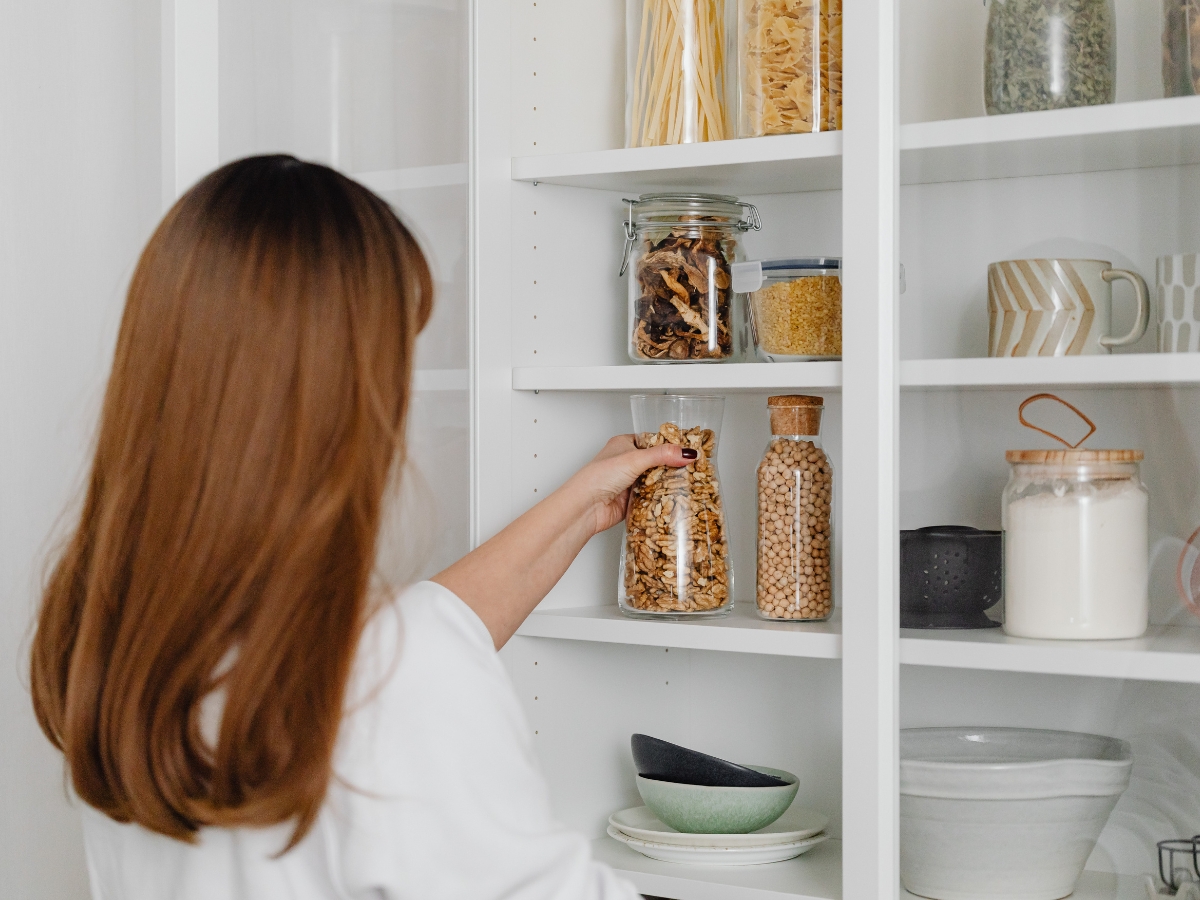
When people look for tips for organizing kitchen cabinets, they often assume they need more storage. In reality, most kitchens already have enough space, but the space is not being used well. Cabinets are deep, shelves are tall, and small items tend to get lost behind larger ones. The best storage ideas do not require a full renovation. They focus on making what you already have easier to see, reach, and maintain.
Start by paying attention to the cabinets that frustrate you most. Deep lower cabinets are usually where things disappear, while upper cabinets tend to become cluttered because items get stacked with no clear system. The goal is to create structure inside each cabinet, so every category has a place, and nothing needs to be moved just to reach what you need. Small upgrades, like adding a second layer inside a shelf or making the back of a cabinet accessible, can change how the whole kitchen feels.
If you are working with a smaller kitchen, these strategies matter even more because every inch counts. When storage is functional, you spend less time hunting for tools, you put things away faster, and your counters stay clearer because you are not constantly pulling everything out to find one item.
How Do Shelf Risers And Dividers Help You Use Vertical Space?
One of the simplest tips for organizing kitchen cabinets is to use vertical space on purpose. Most shelves have enough height to stack items, but stacking creates a visibility problem. When plates and bowls are piled high or pantry items are stacked behind each other, you end up forgetting what you have and buying duplicates.
Shelf risers solve this by creating a second level within the same shelf. Instead of one tall stack of dishes or mugs, you get two shorter layers that are easier to see and grab. This works especially well for everyday items like plates, bowls, and drinking glasses, but it can also help with pantry staples, baking supplies, or even snack bins. The key is that risers reduce clutter by preventing overstacking, which is what usually makes cabinets feel crowded.
Dividers add a different kind of structure. They keep flat items like baking sheets, cutting boards, and serving trays stored upright, so you can pull one out without lifting a pile. They also help prevent toppling and shifting, which keeps cabinets neater over time. When you combine risers and dividers, you create a cabinet setup that stays organized because everything has a stable position.
What Are The Benefits Of Pull-Out Shelves And Drawers?
Pull-out shelves and drawers are one of the most effective upgrades for deep cabinets because they solve the biggest problem: access. A deep cabinet might technically hold a lot, but if you cannot reach the back easily, that space becomes a clutter zone. Items get pushed behind others, and you end up kneeling and rummaging every time you need something.
With pull-outs, the back of the cabinet comes to you. You can see what you have, reach it without straining, and return it without rearranging everything in front. This makes a noticeable difference for pots, pans, mixing bowls, and small appliances that tend to be bulky and awkward to store. It also helps keep categories separated, since each drawer can hold a specific group of items instead of becoming a mixed pile.
If you are collecting tips for organizing kitchen cabinets that make daily life easier, pull-outs are a strong option because they reduce friction. When storage is accessible, you are more likely to keep it organized. That is what makes the system last, even when the kitchen is busy.
How Can You Organize Specific Cabinet Areas For Better Efficiency?
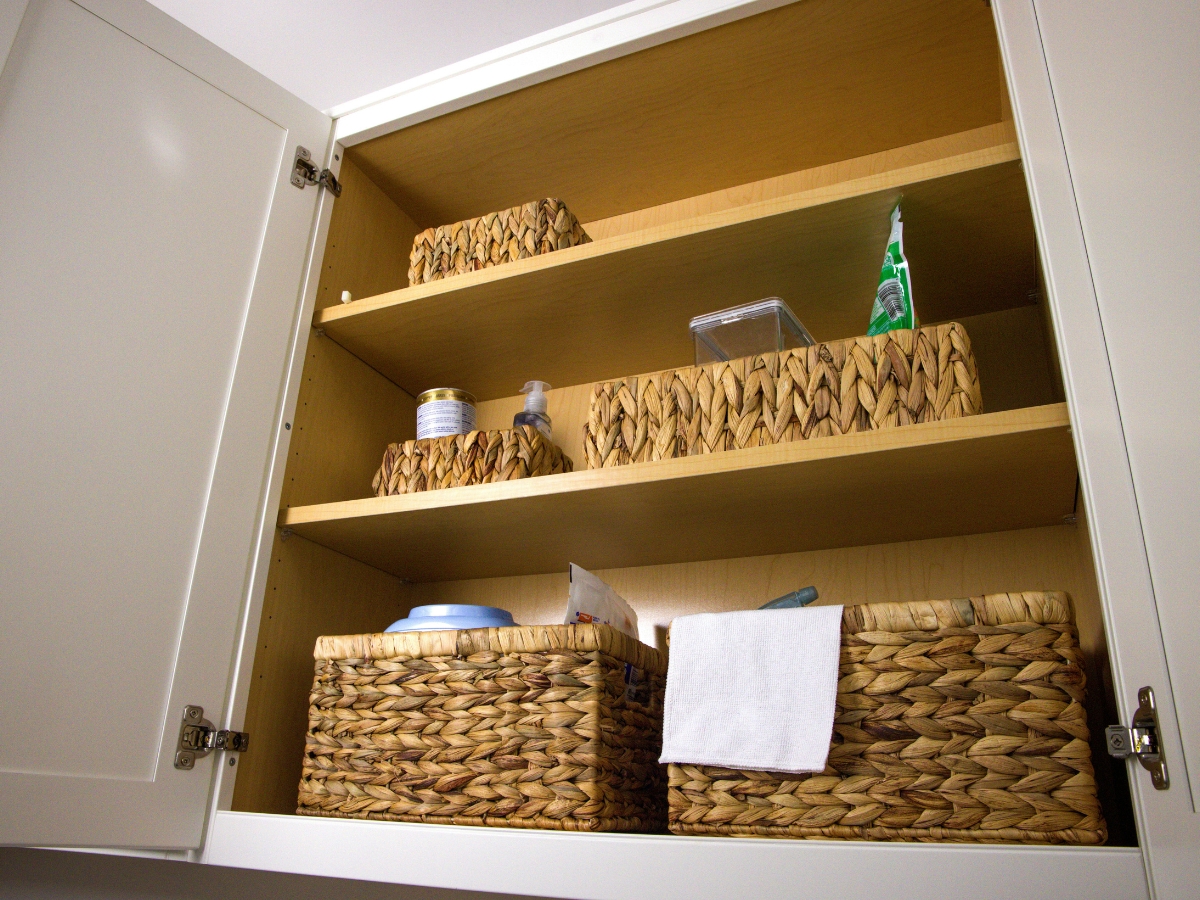
A kitchen can look organized and still feel inefficient if the busiest cabinets are not set up for daily use. When you are applying tips for organizing kitchen cabinets, focus first on the areas you reach for constantly, like the pantry zone and the cabinet under the sink. These spots tend to collect clutter because they hold a mix of categories and get opened multiple times a day. A few targeted changes here usually make the biggest difference, since they reduce the small frustrations that slow you down during cooking and cleanup.
The goal is not to create a perfect system that only works when the kitchen is spotless. It is to create a setup that supports real routines, including quick grocery unloads, rushed mornings, and weeknight cooking. When high-traffic cabinets are set up well, the rest of the kitchen often stays neater because you are not constantly pulling everything out to find what you need.
What Are Smart Pantry Solutions For Food Storage?
Pantry cabinets work best when they make food easy to see and easy to put away. One of the most useful tips for organizing kitchen cabinets is to reduce visual clutter by using a consistent storage approach for dry goods. Clear containers can help because you can see quantities at a glance and avoid buying duplicates. They also keep open packages from spilling and make shelves easier to wipe down.
Tiered shelving is another simple improvement, especially for canned goods, spices, or small jars that get hidden behind taller items. When items are stepped forward, you stop losing food in the back of the cabinet. Grouping staples by type also speeds up meal prep because you are not hunting across multiple shelves. For example, baking items can live together, snacks can stay in one section, and breakfast basics can have their own area. This is less about rigid labeling and more about making categories intuitive.
Bins can be helpful when you have many small items that tend to scatter, such as seasoning packets, snack bars, or drink mixes. Instead of letting them drift across the shelf, a small bin keeps them contained and easy to pull out. If you use a bin, keep it simple and avoid overfilling it. The point is quick access, not a tightly packed drawer of mystery items. A pantry that is easy to maintain will stay organized longer than one that requires constant rearranging.
How Do You Manage Under-Sink Cabinets For Cleaning Supplies?
The cabinet under the sink often becomes a catch-all because it is convenient and hidden. It is also tricky because plumbing reduces usable space and makes it harder to fit standard organizers. The best approach is to create structure while keeping everything easy to remove, since leaks and moisture are common under sinks.
Stackable bins can help separate categories, such as sponges and cloths, dishwashing supplies, and surface cleaners. Sliding organizers are useful because they allow you to reach items in the back without pulling everything out. A tension rod can also be a smart addition because it creates hanging space for spray bottles, which frees up the bottom of the cabinet for bins or taller containers. This setup also helps prevent bottles from tipping over and leaking.
To keep the area cleaner, consider using a simple tray or liner on the cabinet floor to catch drips. This is not a decorative step. It makes cleanup easier and helps you notice leaks quickly. When the under-sink cabinet is organized, you spend less time reshuffling supplies and more time actually finishing the task you started, which is what practical tips for organizing kitchen cabinets are meant to do.
How Does Custom Cabinetry Improve Kitchen Organization?
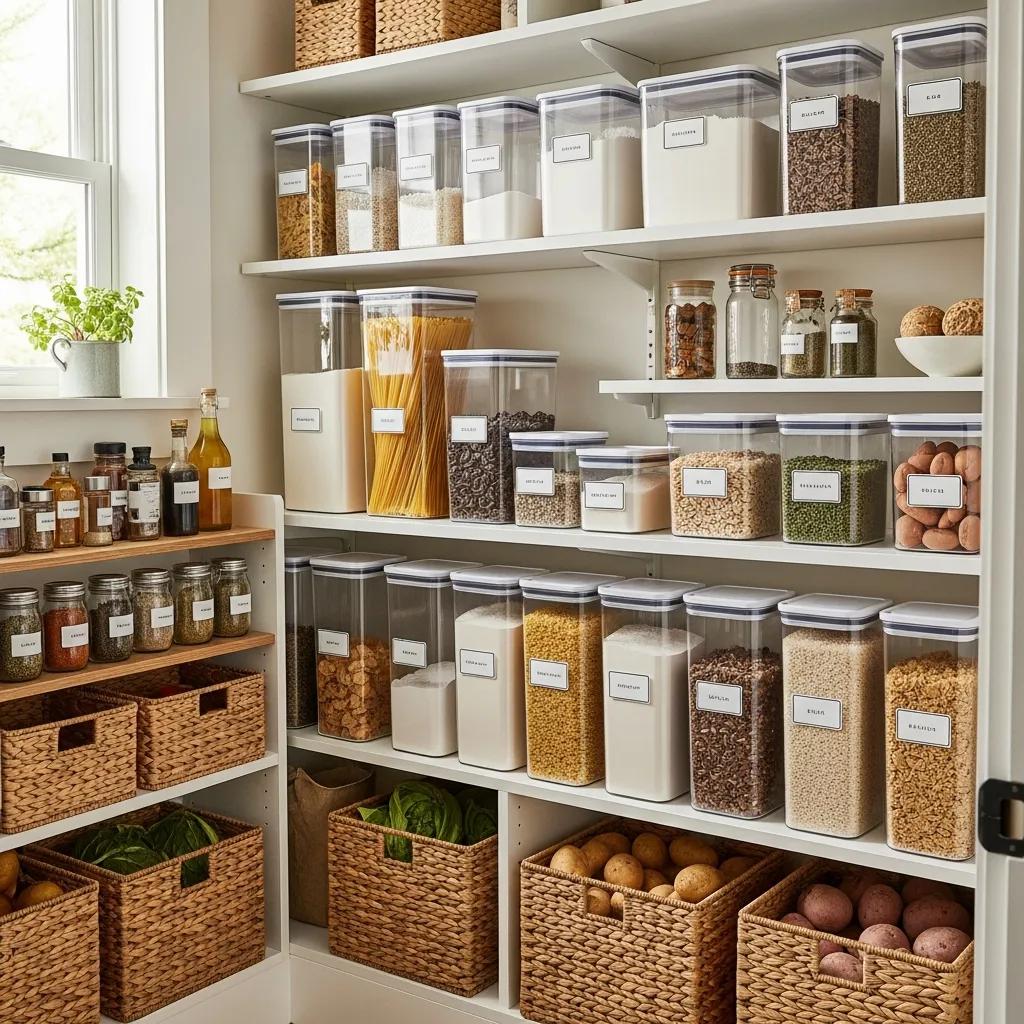
A lot of tips for organizing kitchen cabinets focus on bins, labels, and shelf tweaks, which can help, but there is only so much you can do when the cabinet layout does not match how you actually use your kitchen. Custom cabinetry improves organization because it starts with your habits. Instead of working around a standard box, the storage is designed for your cookware, your pantry items, and the way you move through the space day to day.
The biggest advantage is reduced wasted space. Stock cabinets often leave awkward gaps above shelves, deep corners that are hard to reach, or narrow areas that do not fit common items well. With custom options, shelves can be adjusted to the height of your plates and appliances, drawers can be sized for pots and pans, and inserts can be built to keep small tools from becoming a jumbled mess. When storage is designed around what you own, you spend less time stacking and shifting items just to get to what you need.
Custom cabinetry can also make it easier to maintain order long-term. When each category has a natural home, putting things away becomes simple. That is the part that makes organization stick. Instead of relying on constant re-sorting, the layout supports good habits. If you are collecting tips for organizing kitchen cabinets and want a solution that feels more permanent, improving the cabinet design itself is often the biggest step up.
What Features Of DeWils Cabinetry Support Optimal Storage?
Many homeowners choose brands like DeWils because they offer storage options that can be tailored without overcomplicating the design. Features like adjustable shelving make it easier to fit changing needs over time, whether you are swapping out dishware or adding new appliances. Pull-out drawers and roll-out trays also add real function, especially in lower cabinets where deep storage usually becomes a dark, hard-to-reach space.
Dedicated storage is another improvement that helps kitchens feel calmer. Utensil organizers, built-in spice storage, and compartments that keep lids, baking sheets, or cutting boards upright all reduce the pile-up effect that happens when items are stacked with no structure. These details may seem small, but they remove daily friction. When you can grab what you need in one motion, you naturally keep the cabinet in better shape.
Cabinet design has also changed over time in a way that benefits homeowners. You no longer need a fully bespoke build to get smarter storage. Many modern cabinet lines offer specialized inserts and flexible configurations that create a more custom feel, without the long timeline that used to come with made-to-order cabinetry.
How Do Modern Kitchen Trends Affect Cabinet Design?
Modern kitchen design trends tend to support organization, even when the goal is mostly aesthetic. Clean lines and simplified cabinet fronts reduce visual noise, which makes a kitchen feel less cluttered even when you are actively using it. Hidden storage, such as deeper drawers, appliance garages, and integrated pull-outs, keeps everyday items accessible while keeping countertops clearer.
Lighter finishes can also make a difference in how organized a kitchen feels. Brighter cabinet colors and well-planned lighting help you see what you have, which reduces the habit of overbuying and stuffing items into the back of a shelf. Modern hardware trends lean toward subtle handles or streamlined pulls, which help cabinets look tidy and intentional instead of busy.
The most useful takeaway is that good design and good organization usually work together. When the cabinet layout is built around function, the kitchen is easier to use and easier to maintain. That is why custom and semi-custom options continue to be popular for homeowners who want organization that lasts, not just a quick fix.
What Accessories Make Cabinets More Functional?
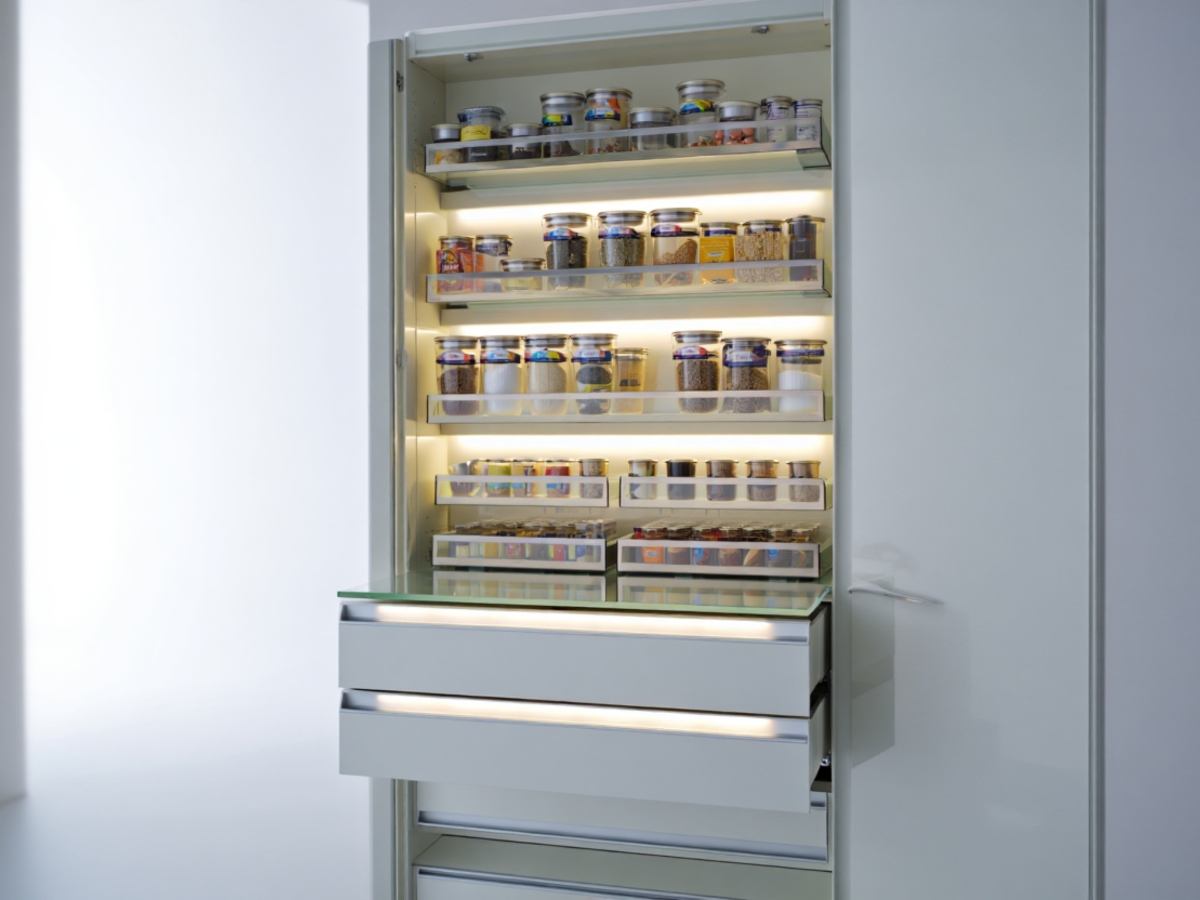
If you are looking for tips for organizing kitchen cabinets that make a real difference day to day, cabinet accessories are often the easiest win. The right add-ons do not just make shelves look neat. They help you use space more efficiently and keep items easy to find, which is what prevents cabinets from turning back into clutter. Accessories work best when they solve a specific problem, like spices piling up in the back, utensils sliding around in a drawer, or bakeware getting wedged together.
Before buying anything, take a quick inventory of where your kitchen slows you down. If you are always digging for seasonings, your spice storage needs structure. If drawers become a catch-all, you need better dividers. If you avoid using a cabinet because it is awkward to reach, you may need pull-outs or a corner solution. The goal is to match the organizer to how you cook, not to force your habits to fit a product.
Many homeowners also find that a few targeted upgrades help preserve the tidy look of the kitchen because items are less likely to be piled randomly. When everything has a clear home, you can put things away quickly, which is one of the most underrated tips for organizing kitchen cabinets.
Which Organizers Work Best For Spices, Utensils, And Bakeware?
Spices are one of the fastest categories to become messy because the containers are small and easy to shove into the back of a shelf. A tiered spice rack helps by creating stepped rows, so labels are readable without picking up each jar. This makes cooking easier and cuts down on duplicates, since you can actually see what you already have. Tiered racks work in cabinets, but they can also work in deep drawers if you prefer a drawer-based setup.
Utensils benefit from trays that create defined sections. Without one, tools tend to shift and overlap, and the drawer becomes frustrating to use. A tray that fits the drawer well keeps cooking tools separated, and it also helps you notice when you have extras you do not need. If your utensil drawer is small, consider narrower trays that still create zones, so you can separate everyday tools from occasional ones.
Bakeware is another common trouble spot because pieces are wide, flat, and awkward to stack. Vertical dividers or slotted racks keep baking sheets, muffin tins, cooling racks, and cutting boards stored upright. This prevents them from sticking together and makes it easier to pull out one item without dragging the whole stack with it. It also reduces the wear that happens when metal pans scrape against each other. These organizers are especially useful in lower cabinets where stacking tends to create a tangled mess.
How Do Corner Solutions Like Lazy Susans Maximize Space?
Corner cabinets can feel like wasted space because items get pushed deep into the back and forgotten. A Lazy Susan solves that problem by turning the depth into something you can access. Instead of reaching into a dark corner, you rotate the tray and bring items forward. This makes the space practical, not just available.
Lazy Susans work best for categories you use often but do not want on the counter, such as oils, vinegars, sauces, or pantry staples. They can also hold small appliances or baking ingredients, depending on the cabinet size. The key is keeping the tray grouped by category, so you are not spinning past random items to find what you need.
When a corner cabinet becomes usable, it can relieve pressure on other cabinets, which helps the whole kitchen stay organized. That is why corner solutions are one of the most effective tips for organizing kitchen cabinets, especially in kitchens where storage feels tight.
How Can Atlanta Homeowners Benefit From Professional Kitchen Organization Services?
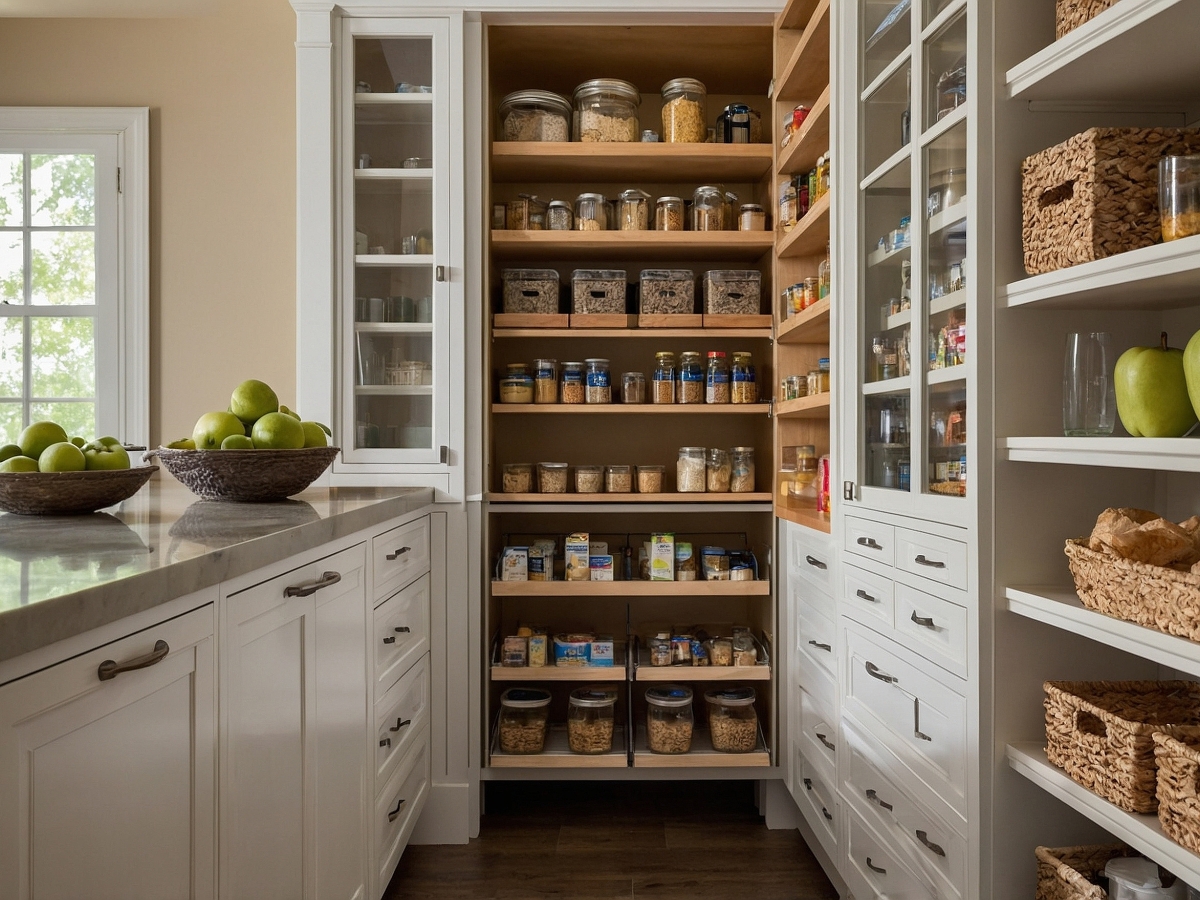
Even with the best tips for organizing kitchen cabinets, it is easy to get stuck in trial and error. You buy a few organizers, rearrange a cabinet, and a week later, the clutter creeps back in because the layout still does not match how your household cooks and stores food. Professional kitchen organization services can help Atlanta homeowners skip that cycle by starting with a clear plan based on the kitchen’s size, traffic patterns, and daily routines.
A professional can spot issues most people overlook, like storage that is technically available but not usable because it is too deep, too high, or poorly placed. They can also help you decide where drawers make more sense than shelves, which zones should be closest to the stove or prep area, and what items should be kept within reach versus stored higher up. Instead of reorganizing the same cabinet repeatedly, you end up with a setup that is easier to maintain because it is built around how you live, not an idealized kitchen routine.
For many homeowners, the payoff is daily convenience. When your cookware, pantry staples, and utensils have clear homes, cooking feels less chaotic, and cleanup is faster. That is what makes organization last. It becomes a system, not a weekend project you have to redo every few months. For Atlanta households that juggle busy schedules, professional guidance can turn general tips for organizing kitchen cabinets into a layout that works long term.
What Is Included In A Free Kitchen Design Consultation By Kitchen And Bath By Zeus?
A design consultation typically starts with a review of your current kitchen setup and what is not working. That includes common pain points like crowded drawers, hard-to-reach corner cabinets, limited pantry space, or cabinets that do not support the way you prep and cook. The goal is to identify where storage is being wasted and where small changes could have a big impact.
From there, recommendations usually focus on practical improvements, such as adjusting cabinet configurations, adding storage features, or changing the layout of key zones. Product options may be discussed as well, especially if you are considering updates like pull-out shelves, drawer inserts, or corner solutions that make deep cabinets easier to use. A strong consultation should also include a realistic plan tied to your budget and timeline, so you know what can be done now and what can be phased in later without disrupting your whole kitchen at once.
How Do Custom Cabinet Installation Services Improve Kitchen Functionality?
Cabinets do more than hold dishes. They shape how the kitchen works. Custom cabinet installation improves functionality because storage is built to fit both the space and the workflow. Instead of forcing items into awkward shelves, you can create storage that matches what you actually use, whether that means deeper drawers for pots, dedicated slots for bakeware, or better use of vertical space for pantry items.
Better access is one of the biggest benefits. Pull-out shelves bring items forward so you are not digging in the back of a cabinet, and drawer-based storage keeps more items visible at a glance. Corner solutions help turn areas that usually become dead space into functional storage. Shelf risers and dividers make it easier to stack and separate items without losing visibility, which is often the reason cabinets feel cluttered even when they are not full.
When these features are installed with the overall layout in mind, the kitchen feels more intentional and easier to keep tidy. For homeowners who want more than quick fixes, combining smart storage features with a thoughtful layout is often the difference between a kitchen that looks organized and a kitchen that stays organized.
Frequently Asked Questions
What Are Some Common Mistakes To Avoid When Organizing Kitchen Cabinets?
A lot of tips for organizing kitchen cabinets focus on what to buy, but the biggest improvements usually come from avoiding a few common habits. One mistake is overfilling shelves because you want everything to fit. When shelves are packed too tightly, items get stacked, hidden, and pushed to the back, which makes the cabinet feel messy even when it is technically “organized.” Another issue is storing items based on where they fit rather than where you use them. If your prep tools are spread across multiple cabinets, cooking feels slower and you are more likely to leave things out on the counter.
Many kitchens also waste vertical space. Tall shelves invite piling, which leads to unstable stacks and hard-to-see items. Using simple shelf risers or dividers helps prevent that without needing a full overhaul. Finally, people often skip maintenance. Organization works best when you treat it like a system, not a one-time project.
How Often Should I Reorganize My Kitchen Cabinets?
Most households do well with a full refresh about once a year, but you do not need to make it a big event. If you notice clutter building up, that is usually a sign that a category has outgrown its space or that items are drifting into the wrong cabinet. A quick reset after major cooking seasons can help too, especially if holidays or gatherings tend to bring in extra serving pieces, specialty tools, or pantry items.
The easiest way to keep things under control is to do small check-ins instead of waiting until cabinets feel unmanageable. When you follow tips for organizing kitchen cabinets consistently, maintenance becomes a quick adjustment rather than a full weekend project.
What Are Some Eco-Friendly Storage Solutions For Kitchen Cabinets?
Eco-friendly organization is mostly about choosing reusable materials and avoiding quick-fix plastics that crack and get replaced. Glass containers are a good option for pantry items because they last, clean easily, and make it simpler to see what you have. Bamboo organizers and sustainably sourced wood inserts can also work well for drawers and shelves, especially if you want something sturdy that holds up over time.
You can also reduce waste by repurposing what you already own. Clean jars, sturdy boxes, and reusable labels can create a clean, consistent system without buying new products. If you are trying to follow tips for organizing kitchen cabinets in a more sustainable way, start by using what you have and only add organizers when you know exactly what problem they solve.
How Can I Maintain My Organized Kitchen Cabinets Over Time?
Maintenance works best when it is simple enough to do regularly. A short monthly check can help you toss expired food, consolidate duplicates, and return items to their home spots. If you keep a “home” for each category, putting things away becomes automatic, which is what keeps cabinets tidy between deeper cleanouts.
It also helps to make the system easy for everyone in the house to follow. If an organizer is too fussy or requires perfect stacking, it usually falls apart. The best tips for organizing kitchen cabinets are the ones that match real life, including busy weekdays and quick cleanups.
What Are Some Budget-Friendly Ways To Organize Kitchen Cabinets?
You can make big improvements without spending much by focusing on structure and consistency. Low-cost bins can group similar items and prevent them from drifting across shelves. Repurposed jars can hold snacks, baking ingredients, or small pantry staples. Simple stackable trays can add a second layer on a shelf so items do not get buried.
Thrift stores often have baskets, containers, and drawer trays that work well once cleaned, and you can adjust them to fit your space. The main idea is to start with decluttering, then add only the tools that support your system. That approach is one of the most reliable tips for organizing kitchen cabinets on a budget.
How Can I Involve My Family In The Kitchen Organization Process?
Cabinet organization works better when the people using the kitchen help shape the setup. Start by asking where they naturally look for items, especially for everyday things like cups, snacks, or lunch containers. When the layout matches real habits, it is easier for everyone to follow.
You can also assign small tasks based on ability, such as sorting utensils, grouping pantry items, or wiping shelves. Keep it simple and focused, like one cabinet at a time, so it feels manageable. When your family feels ownership over the system, they are more likely to maintain it, which is the whole point of using tips for organizing kitchen cabinets in the first place.
Conclusion
An organized kitchen cabinet system transforms your daily routine, making meal preparation more efficient and your space more enjoyable. While smart organizing tips can maximize your current setup, a custom cabinet design tailored to your specific needs provides the ultimate solution for long-term functionality and beauty.
At Kitchen and Bath by Zeus, we specialize in creating personalized cabinetry that combines elegant design with intelligent storage solutions. Ready to transform your kitchen from cluttered to customized? Call 404-602-2668 or fill out our online form to schedule your free consultation today. Let’s design a kitchen that works beautifully for your lifestyle.