

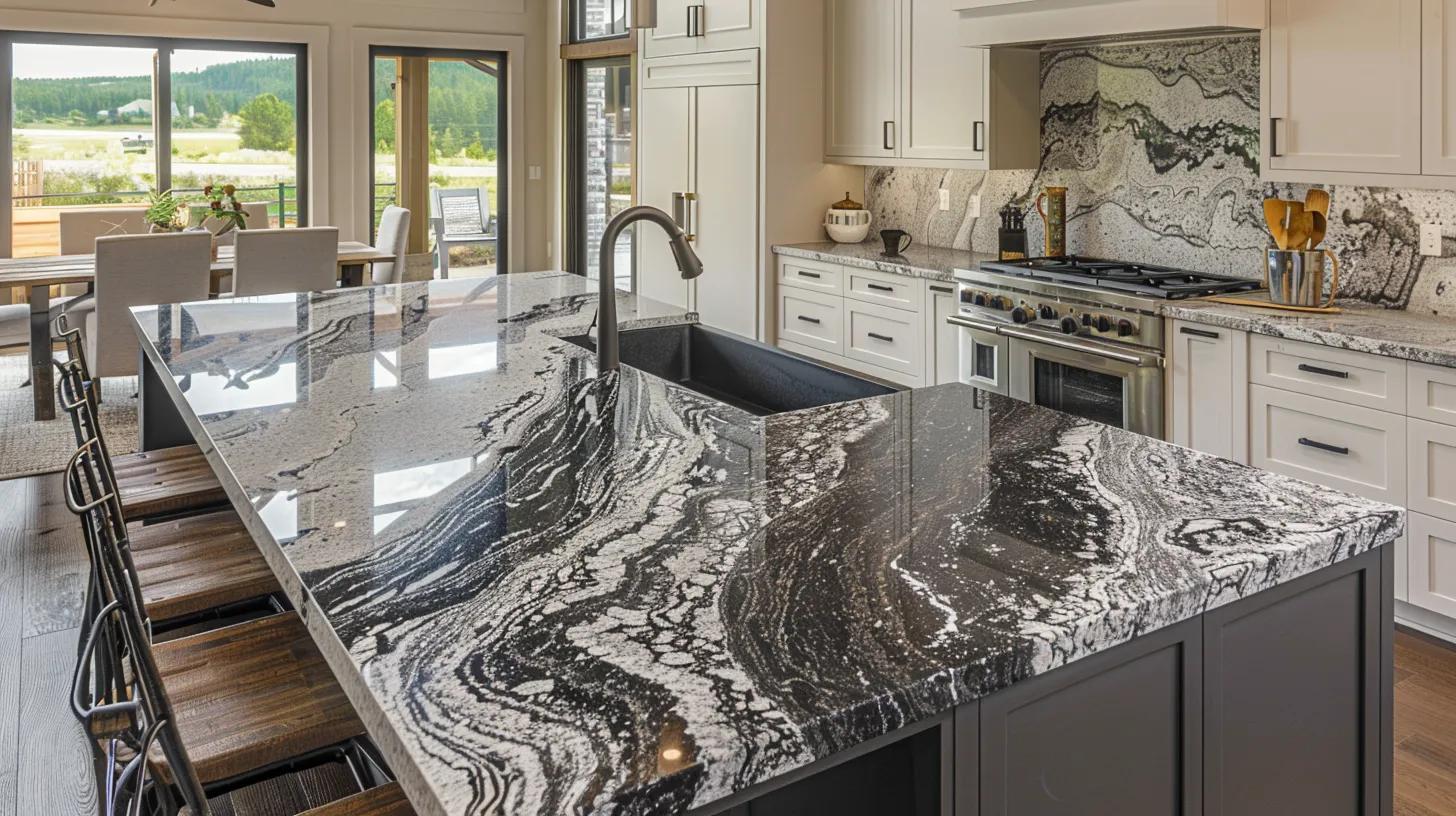
Choosing between granite and quartz can be surprisingly difficult. Both materials deliver the polished look homeowners want from a kitchen countertop, yet they differ in maintenance, durability, appearance, heat resistance, and cost. The better choice often comes down to how you actually use your kitchen.
In the granite vs quartz countertops debate, granite appeals to homeowners who value natural stone and one-of-a-kind patterns, while engineered quartz offers consistent designs and a nonporous surface that requires less routine maintenance. Neither option is automatically better for every household.
Comparing how granite and quartz perform against spills, heat, scratches, daily cleaning, and long-term wear can help you look beyond appearance alone and choose a countertop that fits your kitchen, budget, and lifestyle.
Granite vs Quartz Countertops: Comparing Cost and Long-Term Value
Granite vs Quartz Countertops: Advantages and Disadvantages
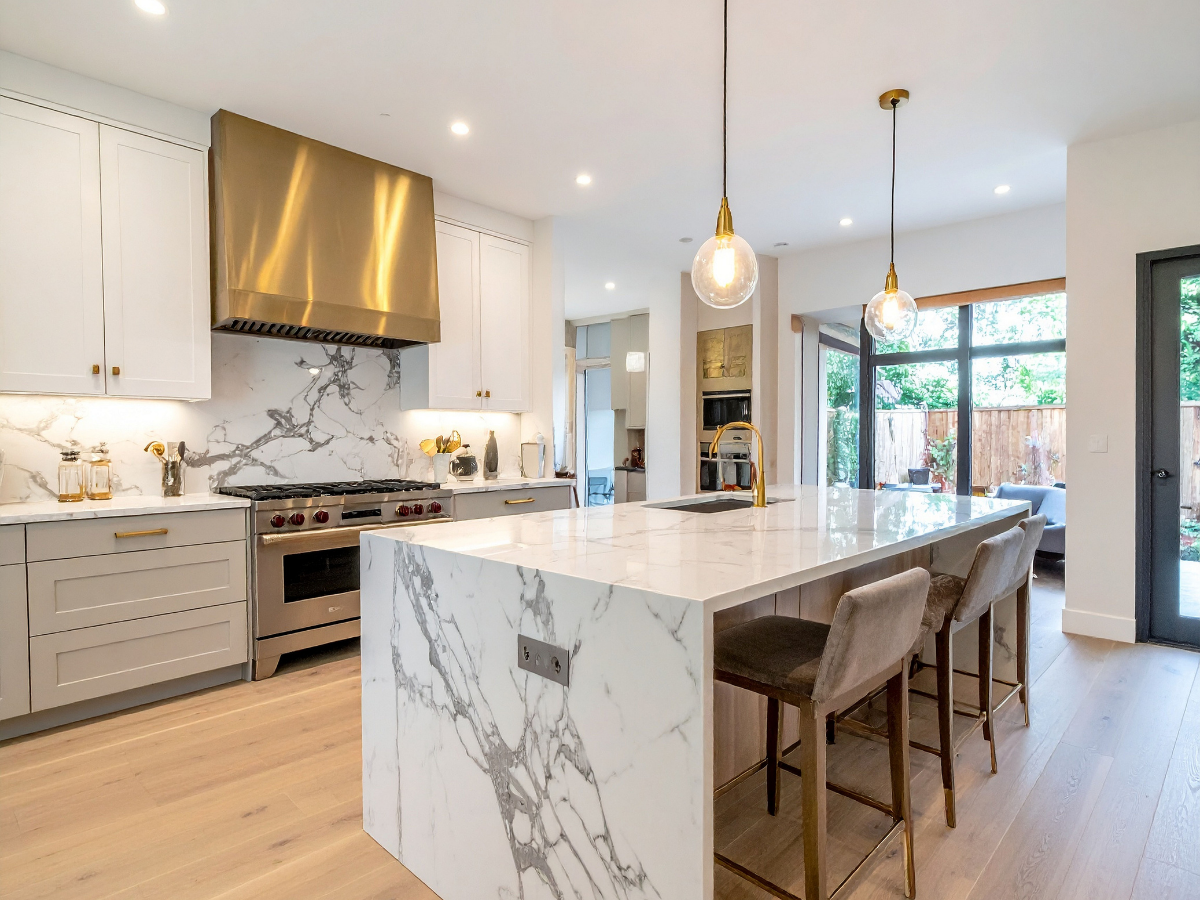
Granite and quartz are both durable, high-end countertop materials, but they offer different advantages in day-to-day use. Granite is natural stone cut into slabs, so every piece has its own mineral patterns, color shifts, and veining.
Quartz countertops are engineered from quartz minerals combined with resins and pigments, which creates a more controlled appearance and a nonporous surface.
For homeowners comparing granite vs quartz countertops, the better choice usually comes down to four practical questions: How much maintenance do you want? How do you use your kitchen? What type of appearance do you prefer? And how important is heat resistance?
| Feature | Granite | Quartz |
|---|---|---|
| Material | Natural stone | Engineered surface |
| Appearance | Each slab is unique | More controlled and repeatable patterns |
| Sealing | May benefit from sealing depending on the stone | Does not require sealing |
| Stain Resistance | Good, but varies by stone and treatment | Highly stain resistant due to nonporous surface |
| Heat Resistance | Excellent, although trivets are still advisable | Heat resistant, but direct high heat can damage resin |
| Scratch Resistance | Very good | Very good |
| Design Consistency | Natural variation between slabs | Easier to coordinate across larger installations |
| Maintenance | Low to moderate | Low |
Granite Offers Natural Variation That Cannot Be Fully Replicated
Granite’s biggest design advantage is also what makes it less predictable. Because it is quarried natural stone, two slabs from the same general color family can still vary in veining, mineral deposits, movement, and tone. Homeowners who want a countertop with individual character often see that variation as part of the appeal.
It does make slab selection more important. A small sample may not accurately represent the movement across an entire piece of granite, particularly with strongly patterned varieties. For kitchens that require several slabs, it is also worth considering how neighboring pieces will meet at seams.
Granite is highly durable and has excellent resistance to scratches and heat. The Natural Stone Institute notes that most granites have very low absorption rates and that many countertops may not require sealing as frequently as generic care advice suggests.
Some stones still benefit from a quality penetrating sealer, so maintenance should be based on the specific material rather than an automatic annual schedule.
Quartz Makes Everyday Maintenance Simpler
Quartz appeals to homeowners who want the look of stone without managing a porous natural surface.
Because engineered quartz is nonporous, it does not require sealing. Routine spills are less likely to penetrate the surface, and everyday cleaning generally requires little more than a mild cleaner, water, and a soft cloth.
Manufacturing also gives quartz greater control over color and pattern. Some designs have subtle, consistent movement, while others imitate dramatic marble-style veining. That consistency can be useful in large kitchens where several slabs need to coordinate across perimeter countertops, islands, and other surfaces.
The tradeoff is heat tolerance. Quartz contains resin, so placing very hot cookware directly on the countertop can cause discoloration or other heat-related damage. Using a trivet or hot pad is a sensible habit regardless of countertop material, but it is particularly important with quartz.
Which Material Handles a Busy Kitchen Better?
Both materials are suitable for heavily used kitchens, so durability alone rarely decides the granite vs quartz countertops debate. Think instead about the type of wear your kitchen experiences.
Granite may be the better fit if you:
- Regularly work around hot cookware and value greater natural heat resistance
- Prefer authentic stone with visible variation
- Do not mind occasional maintenance if the selected stone requires sealing
- Want every countertop installation to have a distinctive appearance
Quartz may be the better fit if you:
- Prioritize stain resistance and minimal maintenance
- Prefer predictable colors and patterns
- Want consistent surfaces across a large kitchen
- Do not mind routinely protecting the countertop from direct high heat
Neither material should be treated as indestructible. Cutting directly on the countertop, dropping heavy objects on edges, using inappropriate cleaners, or subjecting surfaces to extreme thermal changes can shorten the life or appearance of either option.
Appearance Can Be the Deciding Factor
Performance differences matter, but countertop material occupies enough visual space that design often makes the final decision.
Granite tends to work well when natural variation is part of the desired look. Depending on the slab, it can introduce subtle speckling, sweeping movement, or pronounced mineral contrast.
Quartz gives homeowners more control. If the goal is a quiet white surface, a specific veining direction, or a predictable tone that coordinates with cabinets and backsplash materials, engineered quartz may make the design process easier.
This is one reason countertop selection should happen alongside other major kitchen finishes rather than in isolation. Cabinet color, flooring, backsplash pattern, lighting, edge profile, and even the size of an island can change how a slab appears once installed.
Is Granite or Quartz Better Overall?
There is no universal winner. Quartz has an advantage for homeowners who want minimal maintenance, strong stain resistance, and greater visual consistency. Granite is often the stronger choice for homeowners who value natural variation and greater tolerance for heat.
The most useful way to compare granite vs quartz countertops is to rank the differences according to how you actually use the kitchen.
A countertop that matches your cooking habits and maintenance preferences will usually be a better long-term choice than one selected because it is considered more fashionable or technically superior on a single measure.
Granite vs Quartz Countertop Durability: Which Holds Up Better?
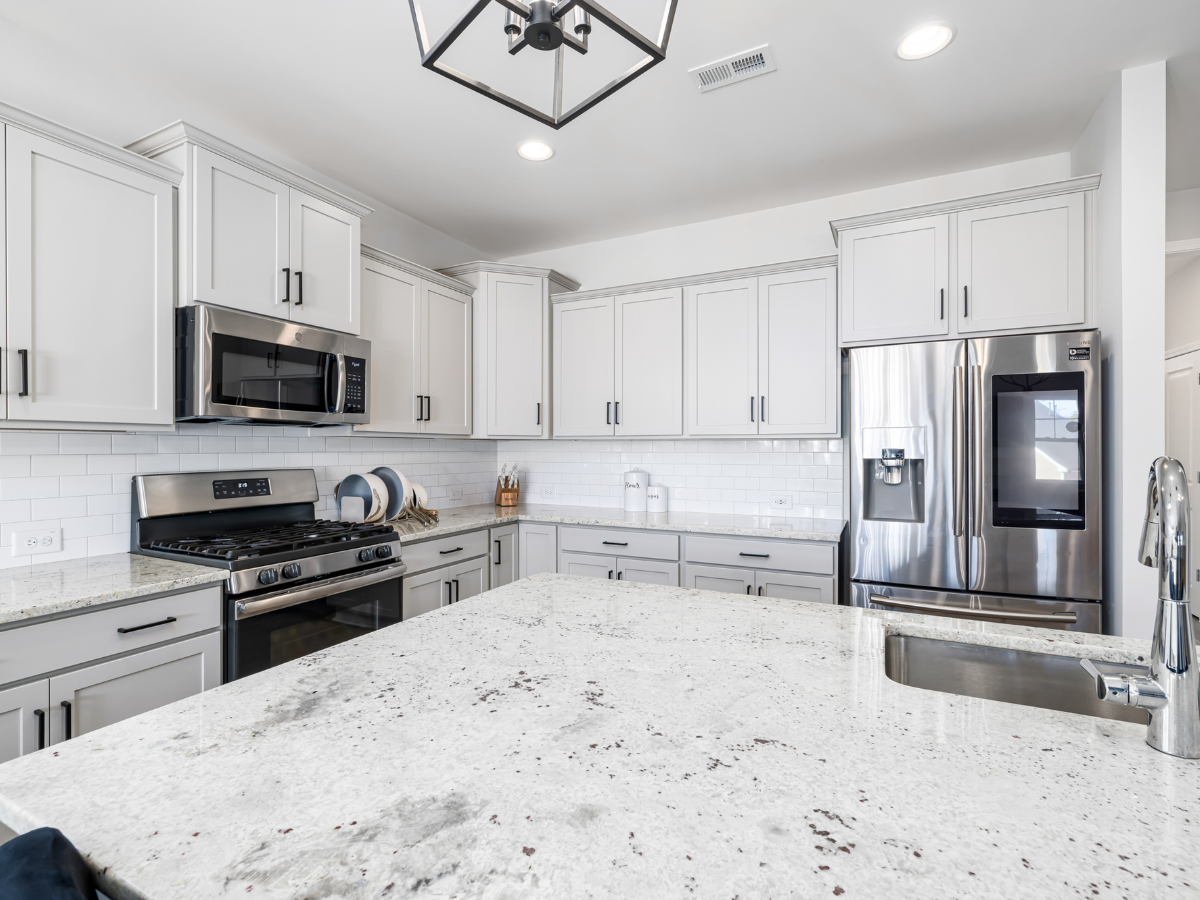
Granite and quartz are both durable enough for busy kitchens, but they do not resist every type of damage equally. Granite has an advantage around high heat, while quartz offers stronger resistance to staining and liquid absorption without requiring a sealer.
Both can still chip at vulnerable edges, and neither should be treated as an indestructible work surface.
For homeowners comparing granite vs quartz countertops, the most useful question is not simply which material is “stronger.” It is which one better handles the kind of wear your kitchen produces every day.
| Durability Factor | Granite | Quartz |
|---|---|---|
| Scratch Resistance | Very good | Very good |
| Stain Resistance | Good, especially when properly sealed | Excellent due to low porosity |
| Heat Resistance | Excellent | More vulnerable to direct high heat |
| Chipping | Possible, especially at edges and corners | Possible, especially at edges and corners |
| Sealing | May be needed depending on the stone | Not required |
| Everyday Cleaning | Simple with stone-safe products | Simple with mild, nonabrasive cleaners |
Granite Performs Especially Well Around Heat
Granite is a hard natural stone with strong resistance to everyday scratches and heat. That makes it particularly practical around ranges, cooktops, and other areas where hot cookware is frequently handled.
Its heat tolerance is better than quartz because granite does not contain the polymer resins used to bind engineered quartz.
Even so, using trivets or hot pads remains a sensible precaution. Sudden or concentrated temperature changes can still create unnecessary stress on a countertop, particularly near edges, seams, or existing weak points.
Scratch resistance is another strength. Normal kitchen utensils are unlikely to damage granite easily, although cutting directly on the surface is still a poor habit. A cutting board protects both the countertop and knife blades while keeping food preparation more sanitary.
Where granite requires more attention is staining. Natural stone has some degree of porosity, although absorption varies considerably between granite varieties.
Depending on the slab, finish, and existing treatment, sealing may be recommended to reduce the chance that oil, wine, coffee, or other liquids penetrate the surface. Rather than assuming granite must be resealed on a fixed annual schedule, follow the fabricator’s recommendations for the specific stone.
Quartz Handles Spills With Less Maintenance
Quartz performs differently because it is an engineered material made from quartz minerals, resins, pigments, and other components.
Its low-porosity surface gives it excellent resistance to common kitchen spills and eliminates the need for periodic sealing. For households where countertops see frequent food preparation, coffee spills, sauces, and other everyday messes, that can be a meaningful durability advantage.
Quartz also offers very good scratch resistance under normal use. As with granite, however, scratch resistant does not mean scratch-proof. Abrasive materials, rough cookware, or repeated misuse can still mark or dull the finish.
Heat is the more important limitation. The resin components in engineered quartz can be damaged by excessive or concentrated heat.
A hot skillet, roasting pan, slow cooker, or other heat-producing appliance placed directly on the surface may cause discoloration, cracking, or other permanent damage. Manufacturer recommendations vary, so using trivets and heat-resistant pads should be considered part of normal quartz countertop care.
Both Materials Can Chip at Edges and Corners
Hardness does not eliminate the risk of impact damage.
Granite and quartz slabs are strong across their broad surfaces, but countertop edges and corners are more vulnerable. A heavy cast-iron pan striking the edge of an island, for example, can chip either material.
Edge profile can influence this risk. Highly pronounced or intricate edges may have thinner projections than simple rounded or eased profiles.
In households where children, heavy cookware, or frequent entertaining create more opportunities for accidental impact, durability should be considered when selecting the edge as well as the countertop material itself.
Good fabrication and installation matter too. Proper support around sink openings, cooktops, overhangs, and seams helps the countertop distribute weight as intended.
This is one reason material choice and kitchen countertop installation should be considered together rather than treating the slab as the only factor affecting longevity.
Which Countertop Is Better for Stain Resistance?
Quartz generally has the advantage. Because engineered quartz is nonporous, liquids cannot penetrate it in the same way they can enter an inadequately protected natural stone surface. Most routine spills can be wiped away without concern about sealing.
Granite can also be highly stain resistant when the particular stone has low absorption and is properly protected when necessary. Spills should still be cleaned promptly, particularly oils and strongly colored liquids.
The practical distinction is maintenance. Quartz provides stain resistance without sealing, while granite’s performance depends more heavily on the characteristics and condition of the individual slab.
Which Material Is More Durable Overall?
There is no single winner in the granite vs quartz countertops comparison because each material is stronger in different areas.
Choose granite if heat resistance is a major priority and you are comfortable checking whether the stone needs periodic sealing.
Choose quartz if resistance to spills and minimal routine maintenance matter more, and you are willing to consistently protect the surface from direct high heat.
For most households, either material can provide a durable kitchen countertop. Long-term performance depends just as much on proper fabrication, installation, cleaning, and everyday habits as it does on whether the surface is granite or quartz.
Granite vs Quartz Countertop Maintenance: What Does Each Require?
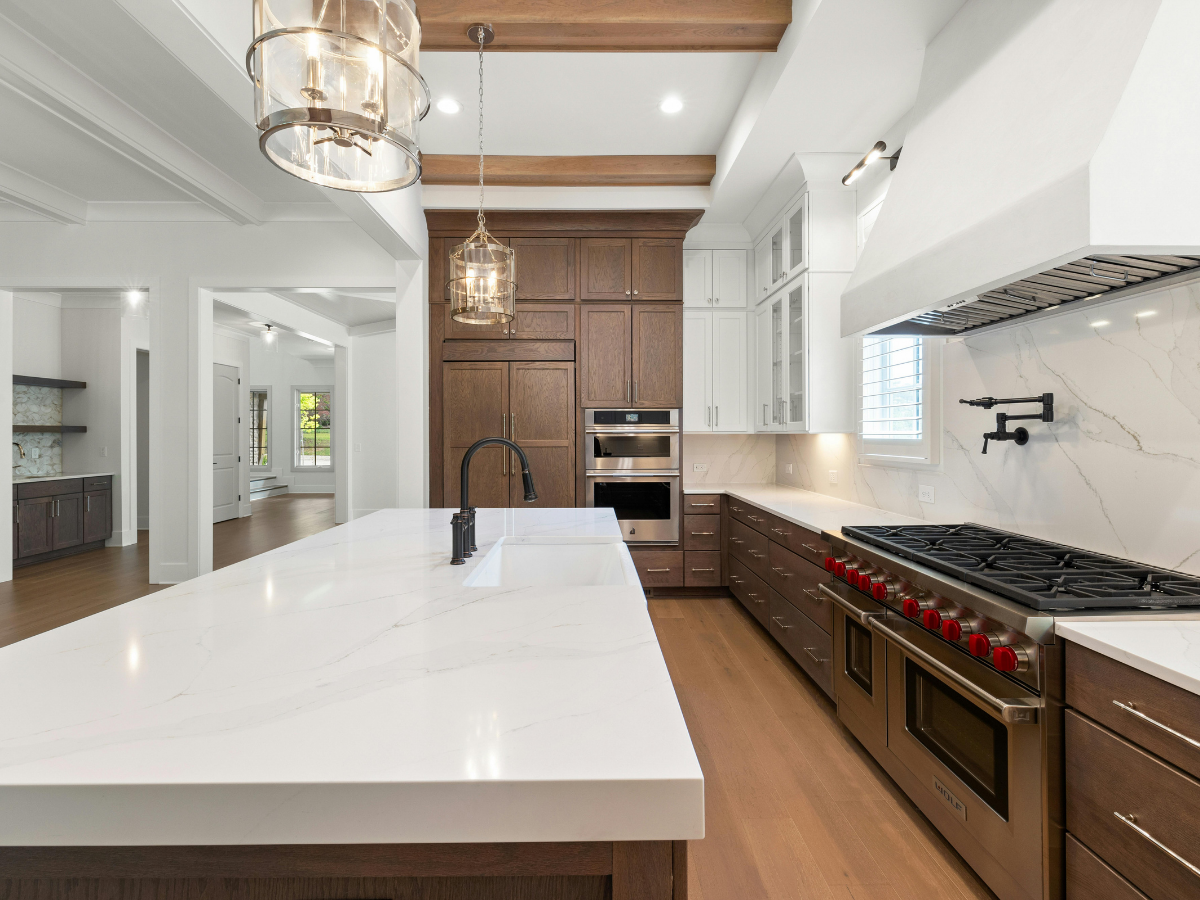
Maintenance is one of the clearest differences between granite and quartz countertops. Both are relatively easy to care for, but granite requires more attention to sealing and stain prevention, while quartz eliminates the sealing step altogether.
For homeowners comparing granite vs quartz countertops, the practical question is how much ongoing upkeep they are comfortable managing. Neither material is difficult to maintain, but their routines are not identical.
Granite Maintenance Depends on the Specific Stone
Granite is a natural stone, which means its porosity can vary from one slab to another. Some granite varieties absorb very little moisture, while others are more susceptible to staining if left unprotected.
That is why sealing recommendations should be based on the actual stone rather than a blanket annual schedule. A fabricator or installer can usually advise whether the countertop needs a penetrating sealer and how often it should be reapplied.
For routine care, granite is straightforward:
- Wipe spills promptly, especially oil, wine, coffee, and strongly colored foods.
- Clean with warm water and a mild, pH-neutral cleaner.
- Avoid abrasive powders and harsh chemicals that can dull the finish or affect the sealer.
- Use cutting boards rather than cutting directly on the stone.
- Use trivets or hot pads as a general precaution, even though granite has strong heat resistance.
One simple way to check whether resealing may be needed is to place a small amount of water on an inconspicuous area and observe whether the stone darkens as moisture is absorbed.
If it does, the surface may need additional protection. Any test should still be followed by the care recommendations for that particular granite.
Quartz Eliminates the Sealing Step
Quartz is nonporous, so it does not require periodic sealing. That is its biggest maintenance advantage. Everyday cleaning usually involves warm water, a soft cloth or sponge, and a mild cleaner.
Because spills remain on the surface rather than soaking into pores, quartz is particularly convenient in kitchens where coffee, sauces, oils, and other liquids are frequently used. Low maintenance does not mean no precautions are necessary.
Abrasive pads and aggressive cleaners can dull or damage the finish, while products containing strong chemicals may react poorly with the resin or pigments in engineered quartz. Manufacturer care instructions should take priority over generic cleaning advice.
Heat protection is also more important with quartz. The resins used in engineered stone can be damaged by concentrated heat, so hot cookware and countertop appliances that produce sustained heat should be separated from the surface with a trivet or protective pad.
How Quickly Should Spills Be Cleaned?
Spills should be addressed reasonably quickly on both surfaces, but the consequences differ.
On quartz, most common household liquids remain on the surface because the material is nonporous. Prompt cleaning still prevents residue, discoloration from strongly pigmented substances, and buildup around seams or edges.
Granite has more potential for absorption, depending on the stone and condition of the sealer. Oil-based spills are particularly worth addressing quickly because they can leave darkened areas if they penetrate the surface.
For either material, allowing dried food, grease, or cleaner residue to accumulate makes maintenance harder than necessary.
Avoid Cleaners That Create More Problems Than They Solve
Strong cleaners are rarely necessary for routine countertop care. Bleach, highly alkaline products, acidic cleaners, abrasive powders, and rough scouring pads can damage finishes or surface treatments depending on the material. Natural stone is particularly sensitive to products that may degrade sealers or alter the finish.
Quartz can also be damaged by repeated exposure to inappropriate chemicals, despite its reputation for easy care.
A mild cleaner and soft cloth will handle most everyday messes. For stubborn stains or dried residue, use a product approved for the specific countertop material rather than increasing scrubbing pressure or reaching for a harsher chemical.
What Happens If Granite or Quartz Is Damaged?
Maintenance also includes dealing with small chips, stains, seams, or surface damage before they become more noticeable.
Minor chips along an edge may sometimes be repaired with color-matched resin or epoxy, although the quality of the repair depends on the location and extent of the damage. Deep cracks, failed seams, or larger edge damage usually require professional evaluation.
Granite stains may sometimes be treated with a poultice designed to draw material from the stone. Quartz staining is less common because the surface is nonporous, but discoloration caused by heat or chemical exposure may be more difficult to reverse.
This is where the difference between care and repair matters. Routine cleaning prevents ordinary buildup, but structural or permanent surface damage should not be treated as a cleaning problem.
Which Countertop Is Easier to Maintain?
Quartz has the advantage for homeowners who want the lowest-maintenance option. It does not require sealing, resists liquid absorption, and is simple to clean with mild products.
Granite requires slightly more involvement because sealing needs vary by stone and spills deserve quicker attention. That extra maintenance is modest, however, and many granite countertops remain easy to care for when the correct products are used.
In the broader granite vs quartz countertops comparison, maintenance is therefore less about one material being difficult and the other being effortless. The real difference is predictability.
Quartz follows a relatively consistent care routine, while granite maintenance depends more on the characteristics of the individual slab and how it has been treated.
What Should You Budget for Granite and Quartz Countertops?
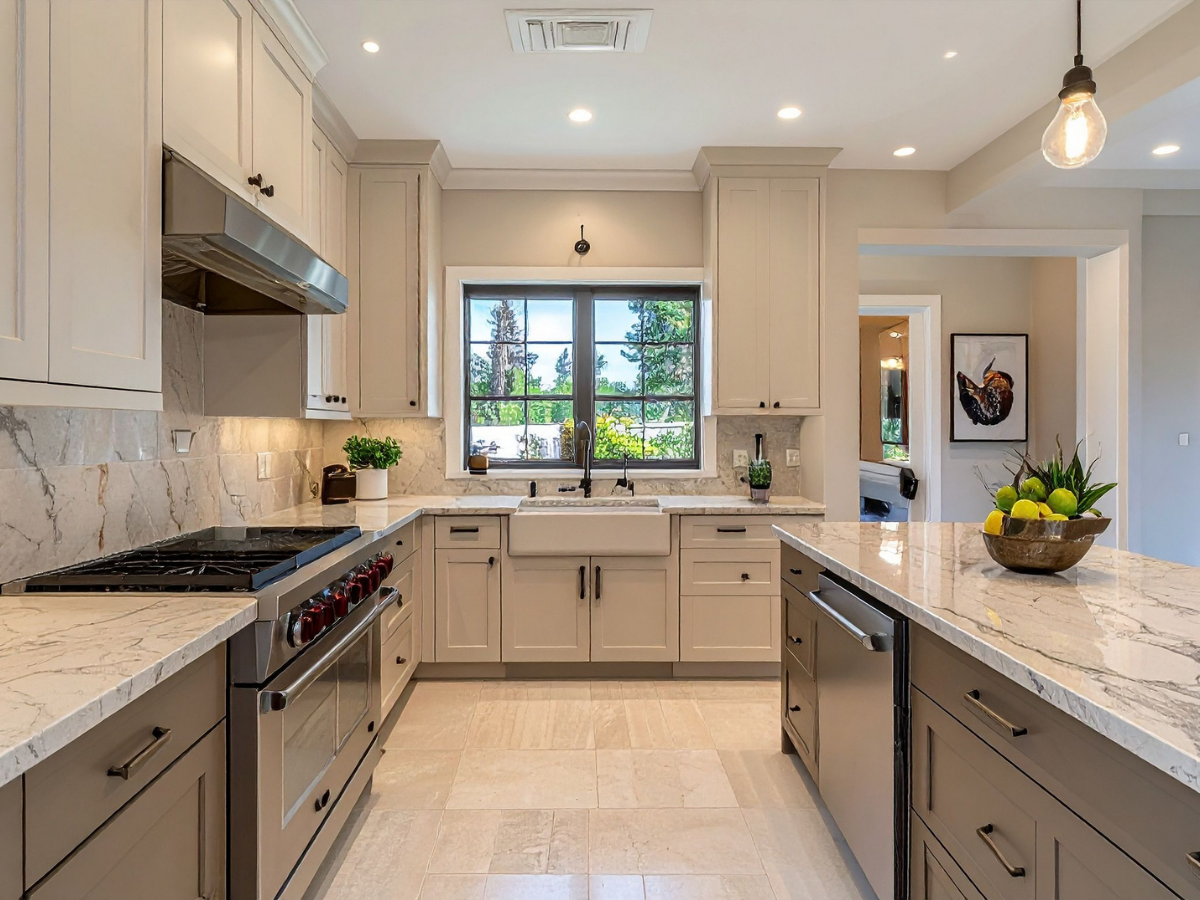
Granite and quartz occupy overlapping price ranges, which makes broad claims about one always being cheaper misleading. The final price depends on the specific slab or quartz product, countertop dimensions, fabrication requirements, edge details, cutouts, and the complexity of the installation.
That means homeowners comparing granite vs quartz countertops should look beyond an advertised price per square foot. The material itself is only one part of the finished cost.
Why Granite Prices Can Vary Significantly
Granite pricing is influenced by the characteristics and availability of natural stone. Common colors and patterns may be relatively affordable, while rarer slabs, unusual colors, dramatic movement, and materials that are more difficult to source can cost considerably more.
The layout of the kitchen also affects how efficiently a slab can be used. Long countertop runs, oversized islands, multiple cutouts, and designs that require careful pattern matching can increase fabrication requirements or require additional material.
For highly patterned granite, seam placement deserves particular attention. A fabricator may need to position cuts strategically so that neighboring sections of stone look intentional when installed. That can affect how much usable material can be obtained from each slab.
Rather than comparing granite by square-foot price alone, ask what is included in the quoted amount and whether the estimate is based on the actual slab you intend to purchase.
Quartz Pricing Depends on the Product You Select
Quartz is manufactured, but that does not make its pricing uniform. Different manufacturers and product collections can vary considerably in price.
Simple colors and subtle patterns may fall toward the more affordable end of a product line, while premium designs with complex veining or specialized finishes can cost substantially more.
Thickness and fabrication also influence the total. Sink openings, cooktop cutouts, edge treatments, seams, and large islands all require additional work regardless of whether the countertop is natural or engineered stone.
This is why premium quartz can sometimes cost more than an attractive granite, while another quartz selection may be the less expensive option. Comparing individual products gives you a much more realistic picture than comparing the two material categories in general.
Remember the Costs Beyond the Countertop Material
A countertop estimate can include much more than the slab itself.
Depending on the project, additional costs may involve:
- Removing and disposing of existing countertops
- Measuring and templating the new surface
- Fabricating sink and cooktop openings
- Creating upgraded edge profiles
- Installing an undermount sink
- Plumbing disconnection and reconnection
- Backsplash changes
- Cabinet adjustments or reinforcement
- Delivery and installation
Some of these costs will be similar whether you select granite or quartz, which can narrow the difference between two materials once the complete project is priced.
Countertop replacement may also be one component of a larger renovation. If cabinets, flooring, plumbing, appliances, or backsplash materials are being changed at the same time, establish the overall kitchen budget before deciding how much to allocate to the countertop.
Homeowners who prefer to spread a larger renovation expense over time can also consider available kitchen remodeling financing options when planning the project.
Do Not Assume Quartz Is Cheaper Over Its Lifetime
Quartz requires no sealing, which reduces one maintenance task, but that does not automatically make it the less expensive countertop over the long term.
Granite sealing requirements vary according to the specific stone. Some granites have very low absorption rates and may need less frequent treatment than generic maintenance schedules suggest. When sealing is necessary, it is only one component of countertop ownership.
For that reason, maintenance costs generally should not outweigh a substantial difference in the initial price of two materials. Compare the actual granite and quartz products you like, then consider maintenance as one part of the decision rather than assuming it will eventually offset a higher purchase price.
Compare Complete Quotes, Not Just Square-Foot Prices
Two countertop estimates can appear very different until you examine what each one includes.
Before deciding, confirm that competing quotes cover the same material thickness, fabrication, edge treatment, number of cutouts, removal work, delivery, installation, and other project requirements. Also check whether sinks, plumbing, backsplash work, or cabinet modifications are included or priced separately.
This makes it much easier to identify whether a price difference comes from the countertop itself or from differences in project scope.
Where Should You Spend More?
If the budget is limited, prioritize expenses that affect the finished countertop’s fit, function, and longevity before paying extra for decorative upgrades.
A complicated edge profile, for example, may be less valuable than selecting a slab you genuinely like or ensuring the kitchen layout minimizes awkward seams. Likewise, paying more for an elaborate quartz pattern may not make sense if a simpler design coordinates just as well with the cabinetry and backsplash.
The best value in the granite vs quartz countertops comparison is rarely whichever material has the lowest advertised starting price. It is the option that delivers the appearance and performance you want without pushing the complete kitchen project beyond a comfortable budget.
Choosing Granite or Quartz to Fit Your Kitchen Design
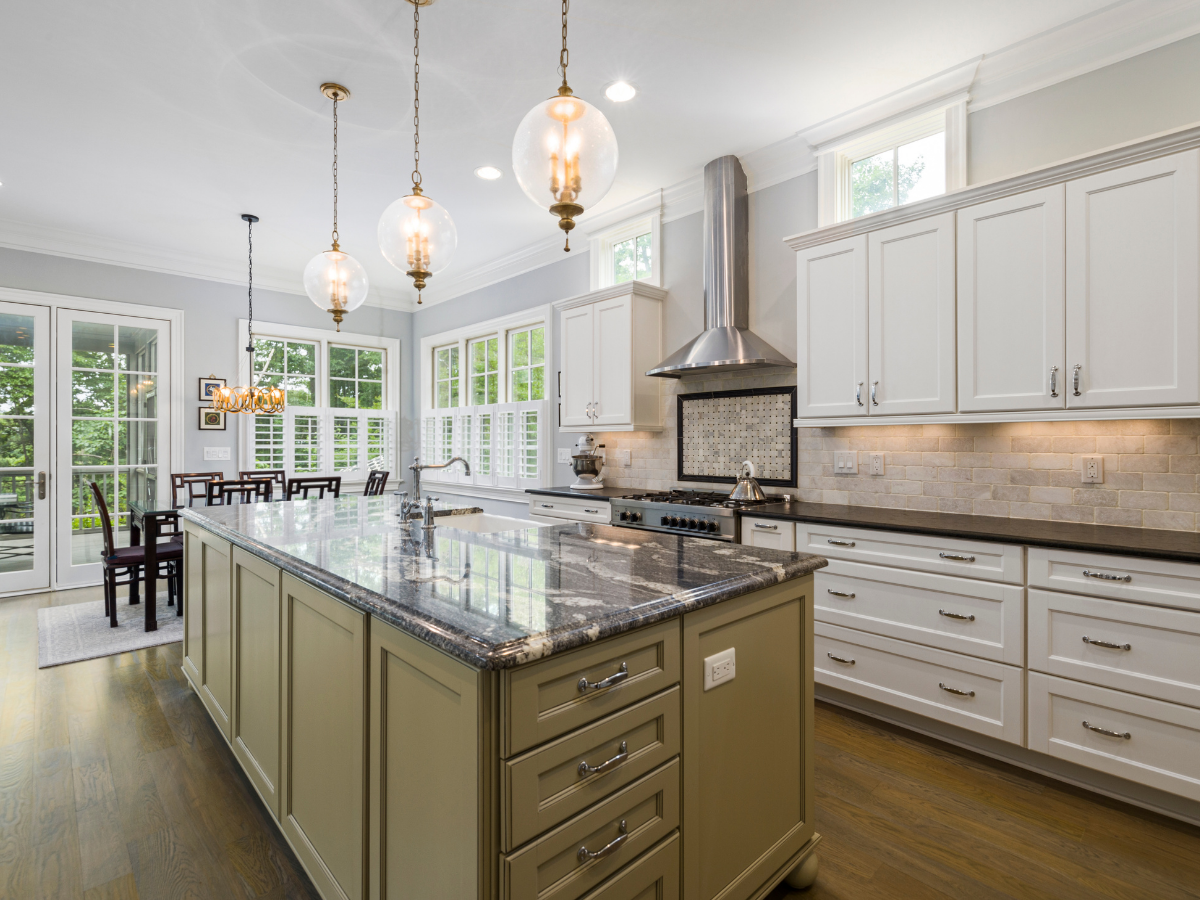
By this point, the practical differences between granite and quartz are fairly clear. The next question is how each material works within the kitchen as a whole.
Countertops occupy a large visual area, often connecting cabinets, backsplash, flooring, appliances, and an island within a single sightline. Choosing between granite vs quartz countertops should therefore involve more than finding a slab that looks attractive in a showroom.
Pattern scale, color, lighting, cabinetry, and the size of the room all affect how that surface will look once installed.
Coordinate the Countertop With Cabinets and Backsplash
Cabinet color is one of the best places to start because cabinetry usually represents a larger visual commitment than the countertop.
With white or light cabinets, both granite and quartz provide considerable flexibility. A quiet surface can create a bright, seamless kitchen, while darker stone or pronounced veining introduces contrast. There are many ways to approach countertop colors for white kitchen cabinets, so the choice does not need to default to another white or gray surface.
Wood cabinets require slightly different thinking. Look at the undertones in the wood before selecting a countertop. Warm cream, brown, gold, or earthy mineral tones may complement warmer woods, while cooler whites and grays can create deliberate contrast.
The backsplash should support this relationship rather than compete with it. If the countertop has dramatic movement, a quieter backsplash often gives the eye somewhere to rest. A relatively simple countertop leaves more room for patterned or textured tile.
Decide How Much Pattern the Kitchen Can Handle
Granite naturally introduces variation. Flecks, mineral deposits, veining, and shifts in color can make the countertop one of the strongest visual elements in the room.
Quartz gives you more control over that movement. Options range from nearly solid surfaces to designs with broad veins intended to resemble marble and other natural stones.
Neither approach is inherently more modern or more timeless. The important consideration is visual balance.
A dramatic countertop paired with strongly grained cabinets, patterned flooring, decorative backsplash tile, and statement hardware can make a kitchen feel busy. If several finishes already command attention, a quieter countertop may pull the room together.
For homeowners still developing the overall palette, thinking through kitchen colors that work together can help prevent individual selections from looking disconnected once they share the same space.
Consider the Size and Layout of the Kitchen
Countertop pattern can behave differently depending on the amount of surface area available.
A large island provides enough uninterrupted space for bold veining or an expressive granite slab to become a focal point. Smaller kitchens contain shorter countertop runs, more corners, and more visual transitions, which can interrupt large patterns.
That does not mean small kitchens need plain countertops. Scale simply becomes more important. A restrained pattern can make several smaller surfaces feel connected rather than fragmented. Similar principles apply throughout small kitchen design, where coordinating finishes can reduce visual clutter without making the room feel bland.
Slab dimensions deserve consideration in larger kitchens as well. If an island requires a seam, the location and pattern transition should be discussed before fabrication rather than discovered during installation.
Look at Samples in Your Actual Kitchen Lighting
Countertop color can change noticeably under different lighting.
A quartz sample that appears crisp white beneath showroom lighting may reveal warmer or cooler undertones at home. Granite can change even more because its minerals reflect light differently throughout the slab.
Bring samples into the kitchen whenever possible and compare them during the day and at night. Place them next to cabinet doors, backsplash samples, flooring, and nearby finishes rather than evaluating each material separately.
For granite, viewing the full slab is especially valuable. A small sample cannot show all the movement, veining, or color variation that may appear across several feet of natural stone.
Treat Trends as Inspiration, Not a Deadline
Kitchen trends can be useful for discovering combinations you might not otherwise consider, but a countertop is a long-term installation. Designing solely around what is fashionable in a particular year can create a kitchen that feels dated sooner than necessary.
Current kitchens continue to explore stronger veining, natural textures, contrasting islands, warmer palettes, and more personalized combinations of finishes. Those ideas can work beautifully when they suit the architecture of the home and the homeowner’s preferences.
The better approach is to borrow selectively. A bold quartz pattern may provide exactly the focal point a simple kitchen needs. In another space, naturally varied granite may introduce enough texture without requiring additional statement finishes.
Choose the Material After You Define the Look
Design preferences can sometimes settle the granite vs quartz countertops decision more easily than another technical comparison.
If you want natural irregularity and do not expect every section of the countertop to match perfectly, granite embraces that variation. If the design depends on predictable color, controlled veining, or consistency across multiple surfaces, quartz offers more control.
Neither material limits you to one kitchen style. Both can work in traditional, transitional, contemporary, and highly personalized spaces. The strongest choice is the surface that complements the rest of the kitchen rather than competing with it.
How to Choose Between Granite and Quartz Countertops
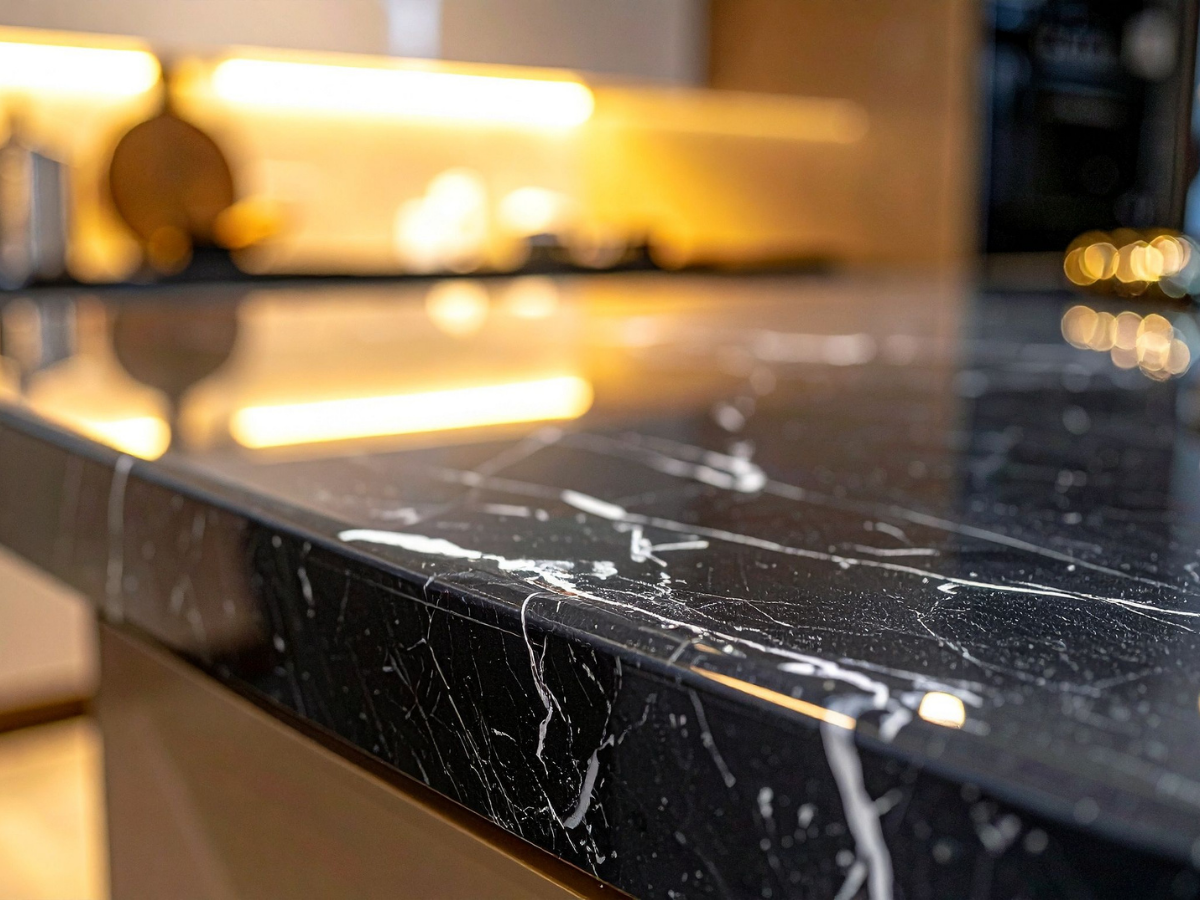
After comparing performance, upkeep, cost, and design, the final decision usually comes down to priorities. Granite vs quartz countertops can both work well in a kitchen remodel, but they suit different preferences, habits, and design goals.
Instead of asking which material is better in general, ask which tradeoffs matter most in your kitchen.
Choose Granite If Natural Variation Matters Most
Granite is often the stronger fit for homeowners who want the countertop to feel unmistakably natural. Each slab has its own mineral pattern, veining, and color variation, so the finished surface will not look exactly like a manufactured sample.
Granite may also appeal if you frequently cook with high heat and want a surface with strong heat resistance. That does not eliminate the need for trivets or reasonable care, but granite generally tolerates heat better than quartz because it does not rely on resin binders.
The tradeoff is that granite requires a little more attention to the characteristics of the specific stone. Some varieties may benefit from sealing, and the appearance can vary noticeably from one area of the slab to another.
Granite is a good match if you:
- Prefer natural stone over a manufactured surface
- Like one-of-a-kind pattern variation
- Are comfortable reviewing the full slab before fabrication
- Want strong heat resistance
- Do not mind material-specific maintenance
Choose Quartz If Consistency and Simpler Care Matter More
Quartz is often easier to live with for homeowners who want predictable color, pattern, and maintenance.
Because quartz is engineered, manufacturers can produce surfaces with more controlled veining and consistent coloration. That can be especially helpful when countertops need to coordinate across a large island, perimeter cabinets, or multiple sections of the kitchen.
Quartz is also nonporous and does not require sealing, which removes one maintenance decision from the homeowner’s routine.
Its main limitation is heat. Hot cookware should not be placed directly on the surface because excessive heat can affect the resin used in the material.
Quartz may be the better choice if you:
- Want a consistent appearance throughout the kitchen
- Prefer minimal routine maintenance
- Prioritize stain resistance
- Like marble-inspired or controlled patterns
- Are comfortable using trivets and heat protection
Think About How the Countertop Will Actually Be Used
Lifestyle can narrow the choice faster than comparing specifications.
A household that cooks heavily, moves hot cookware frequently, and prefers natural materials may lean toward granite. A busy family that wants easy cleanup and minimal maintenance may find quartz more convenient.
Also consider how forgiving you want the surface to be visually. Granite’s natural movement can sometimes disguise crumbs, fingerprints, or minor everyday marks, depending on the pattern. Very light or solid-colored quartz may show them more readily even though the material itself is easy to clean.
Neither material is completely maintenance-free or damage-proof. The goal is to choose the one whose limitations are easiest to accommodate in your routine.
Compare the Actual Materials, Not Just the Categories
One of the most useful steps in choosing between granite vs quartz countertops is comparing real products rather than relying on general descriptions.
Two granite slabs can differ dramatically in color, movement, porosity, and price. Quartz collections also vary widely in pattern, finish, thickness, and cost.
Whenever possible, compare:
- The exact slab or quartz design
- The complete installed price
- Edge and seam requirements
- Maintenance recommendations
- Warranty terms, if applicable
- How the surface looks beside your cabinets, flooring, and backsplash
This approach prevents the decision from becoming an abstract “granite versus quartz” debate when the real choice is between two specific surfaces.
Do Not Make the Decision From a Small Sample Alone
Samples are useful for checking color, but they have limits.
Granite samples cannot capture all the natural movement within a full slab. Quartz samples may also underrepresent large-scale veining, especially in designs with broad patterns.
Seeing larger pieces can reveal how a countertop will behave across an island or long cabinet run. It also makes it easier to identify undertones that may clash with cabinets, flooring, or backsplash materials.
For homeowners planning a broader remodel, a professional kitchen design consultation can also help evaluate material choices within the full room rather than selecting the countertop in isolation.
Let the Tradeoffs Decide
There is no universal winner in the granite vs quartz countertops comparison.
Choose granite when natural stone, visual variation, and stronger heat tolerance are higher priorities. Choose quartz when consistency, stain resistance, and easier maintenance matter more.
If both still appeal to you, narrow the decision by selecting a few actual slabs or quartz designs within your budget and comparing them in the context of your kitchen. At that point, the better choice usually becomes much clearer.
Frequently Asked Questions About Granite and Quartz Countertops
Are Granite or Quartz Countertops More Environmentally Friendly?
There is no simple environmental winner between granite vs quartz countertops. The impacts occur at different stages of production.
Granite is a natural material, but quarrying, processing, and transporting heavy slabs require energy. Where the stone comes from can therefore matter, particularly when it travels a long distance before reaching the home.
Quartz countertops are manufactured from quartz minerals combined with binders, pigments, and other ingredients. Their environmental footprint depends partly on the manufacturer’s production methods, material composition, recycled content, and transportation.
Longevity should also be part of the comparison. Both materials can remain functional for many years when properly installed and maintained, reducing the need for frequent replacement.
Homeowners concerned about sustainability can ask suppliers about material origin, recycled content, manufacturing practices, and available environmental certifications rather than judging the materials solely by whether they are natural or engineered.
How Long Do Granite and Quartz Countertops Last?
Both can provide decades of service in a residential kitchen. Their useful lifespan depends on installation quality, everyday treatment, and whether damage occurs.
Granite is a natural stone that can remain functional for many years with appropriate care. Quartz is similarly durable, although excessive heat and certain chemicals can damage its resin-based components.
In many kitchens, homeowners are more likely to replace either material because the room is being remodeled or the design no longer suits their preferences than because the countertop has simply worn out.
Are Seams More Noticeable in Granite or Quartz?
Seam visibility depends more on the countertop color, pattern, layout, fabrication, and installation than on the material alone.
Busy granite patterns can sometimes disguise seams because natural movement draws attention away from the joint. On other slabs, matching distinctive veins or mineral patterns across a seam can be challenging.
Quartz has more predictable patterns, but seams may stand out on solid or very light colors. Large-scale veined quartz also requires thoughtful positioning if the pattern is expected to continue naturally between sections.
For either material, discuss seam locations before fabrication, particularly around islands, corners, sinks, and long countertop runs.
Can Granite and Quartz Countertops Be Repaired?
Minor chips and some types of surface damage can often be professionally repaired, although the finished result depends on the location, severity, color, and pattern of the countertop.
Small chips may be filled with a color-matched resin or epoxy. Cracks, damaged seams, and larger edge failures usually require professional evaluation to determine whether repair is practical.
Matching the repair can be easier on some patterned surfaces because variation helps disguise it. Damage on a highly uniform countertop may be more visible after repair.
Can You Install New Countertops Without Replacing the Cabinets?
Often, yes. Granite or quartz countertops can be installed on existing cabinets if the cabinetry is structurally sound, appropriately configured, and capable of supporting the new surface.
The cabinets should be evaluated before fabrication because an uneven or unstable base can create problems after installation. This is particularly important when replacing a lighter countertop material with heavy stone or engineered slabs.
If the cabinets are damaged, poorly laid out, or already scheduled for replacement, it usually makes more sense to address those issues before measuring for new countertops. Homeowners keeping their existing cabinetry can also consider whether a kitchen cabinet makeover would help the surrounding finishes work better with the new surface.
Do Granite and Quartz Countertops Add Resale Value?
Both are widely regarded as desirable countertop materials, but homeowners should be cautious about expecting a specific return on investment from either one.
Buyer preferences vary by home, neighborhood, price range, and current design trends. Some buyers prefer the character of natural granite, while others value the consistent appearance and easier maintenance associated with quartz.
Condition and design cohesion can matter as much as the material name. A well-maintained countertop that complements the cabinetry, flooring, and overall kitchen is likely to make a stronger impression than an expensive surface that feels disconnected from the room.
Are Granite Countertops a Radon Risk?
Granite contains naturally occurring radioactive elements, so some slabs can emit very small amounts of radon. However, the U.S. Environmental Protection Agency states that it does not have data showing granite countertops significantly increase indoor radon levels.
Radon entering homes from the soil beneath the building is generally the greater concern. Homeowners worried about exposure should test the home’s indoor air rather than relying on the presence or absence of granite countertops as an indicator.
Are There Health Concerns With Quartz Countertops?
The primary health concern associated with engineered stone involves workers who cut, grind, or fabricate material containing crystalline silica. That occupational exposure is different from living with a finished quartz countertop.
Once a countertop has been fabricated and installed, normal household use does not involve the same dust-generating processes. Cutting or modifying engineered stone should be left to professionals who use appropriate silica-dust controls.
For homeowners comparing granite vs quartz countertops, this distinction is important. Questions about product composition and indoor emissions can be directed to the manufacturer or supplier, while fabrication safety should be addressed by the professionals handling the material.
Conclusion
Choosing between granite and quartz countertops ultimately comes down to how you use your kitchen, the look you want, and how much maintenance you prefer.
Granite offers distinctive natural variation and timeless character, while quartz provides consistent design options and a nonporous surface that requires less routine upkeep.
Whichever material fits your priorities, careful selection and professional installation can help ensure your new countertops complement the rest of your kitchen and perform well for years to come.
For custom kitchen remodeling and expert design guidance, choose Kitchen and Bath by Zeus. If you’re ready to find the right countertops for your kitchen renovation, call 404-602-2668 to speak with the team at Kitchen and Bath by Zeus or fill out the online form to schedule your free consultation for property owners today.